

Introduction
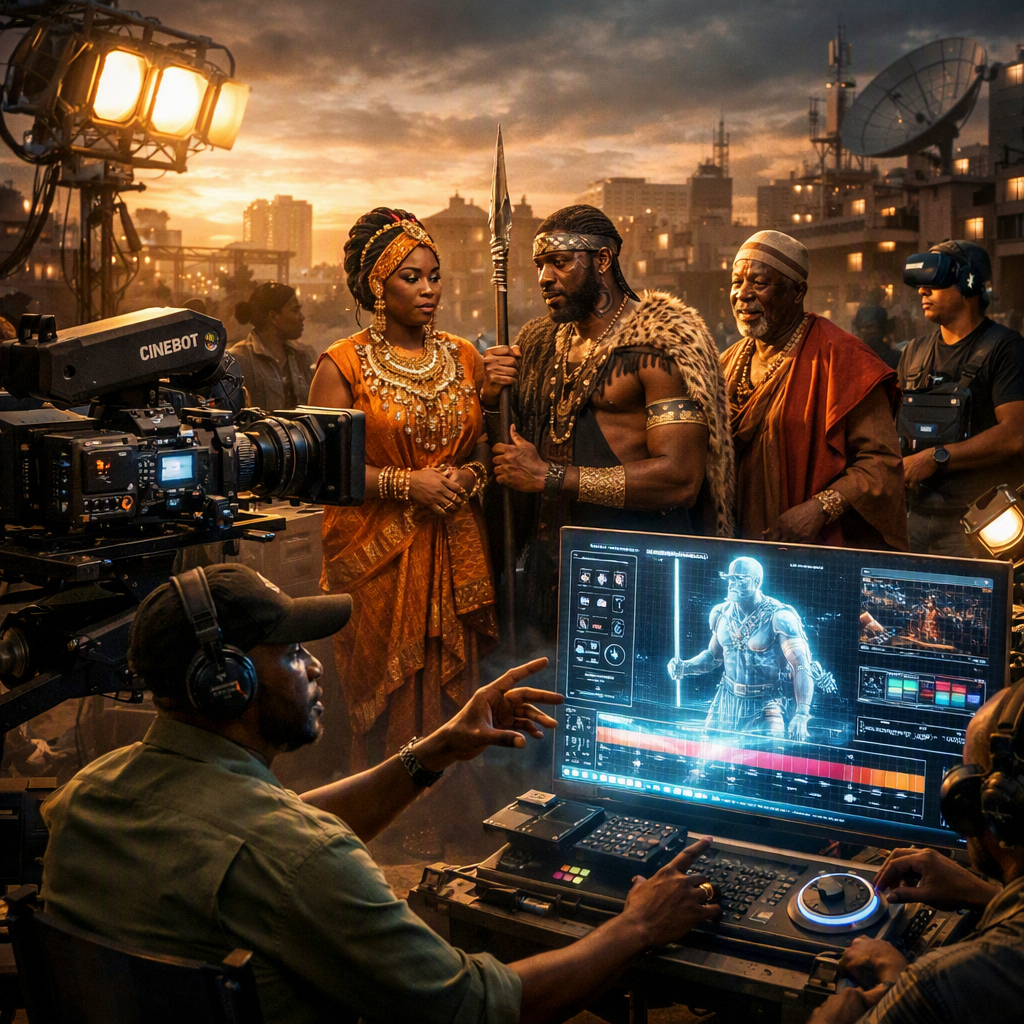
The African movie industry has experienced remarkable growth over the past two decades. From Nollywood in Nigeria to emerging film hubs in South Africa, Kenya, Ghana, and Senegal, African filmmakers are reaching wider audiences and gaining international recognition. Alongside this expansion, artificial intelligence is beginning to reshape how films are written, produced, edited, distributed, and marketed across the continent.
AI technologies are helping filmmakers reduce production costs, improve efficiency, analyze audience behavior, and create better visual experiences. While these tools offer exciting opportunities, they also raise concerns about employment, originality, data access, and digital inequality. The impact of AI on Africa’s film industry is therefore both promising and complex.
The Growth of Africa’s Film Industry
Africa’s movie industry is one of the fastest-growing creative sectors in the world. Nigeria’s Nollywood alone produces thousands of films annually and contributes significantly to the country’s economy. Streaming services have also expanded opportunities for African creators by introducing local stories to global audiences.
Despite this growth, many filmmakers still face challenges such as limited budgets, lack of advanced equipment, piracy, and restricted access to international distribution channels. AI-powered tools are increasingly being seen as solutions that can help bridge some of these gaps.
AI in Film Production
Scriptwriting and Story Development
AI-assisted writing tools are helping screenwriters organize ideas, analyze story structures, and improve dialogue flow. Filmmakers can use data-driven insights to identify themes and genres that resonate with audiences. This can help producers make more informed decisions about the kinds of films likely to succeed commercially.
In Africa, where independent filmmakers often work with small teams and limited resources, these tools can speed up pre-production and reduce development costs. However, concerns remain about preserving authentic African storytelling traditions and avoiding overreliance on formula-based content.
Editing and Post-Production
Post-production is one of the most expensive parts of filmmaking. AI-powered editing software can automate repetitive tasks such as color correction, audio cleanup, scene detection, and subtitle generation. This allows editors to focus more on creativity and storytelling.
For African studios with limited technical infrastructure, AI tools can significantly reduce production timelines. Smaller production companies can now produce content with visual quality that competes with larger international studios.
Visual Effects and Animation
AI is also improving animation and visual effects production. African filmmakers are increasingly exploring science fiction, fantasy, and historical epics that require advanced digital effects. AI-assisted rendering and motion tracking technologies reduce the cost and complexity of creating these visuals.
This development is especially important for African animation studios that want to tell culturally relevant stories while competing in the global entertainment market.
AI and Film Distribution
Streaming platforms use AI algorithms to recommend films to viewers based on their preferences and viewing habits. This has helped African movies gain visibility among international audiences who may not have discovered them through traditional cinema channels.
Platforms can now analyze audience behavior to determine which genres, actors, or themes perform best in different regions. This information helps filmmakers and distributors make smarter investment decisions.
AI is also improving subtitle translation and dubbing, making African films more accessible across language barriers. This is particularly valuable on a continent with thousands of languages and diverse cultural groups.
Marketing and Audience Engagement
Marketing has become increasingly data-driven. AI tools can analyze social media trends, audience sentiment, and online engagement to help studios design more effective promotional campaigns.
African filmmakers can use predictive analytics to identify target audiences and optimize advertising budgets. This is especially useful for independent creators who may not have access to large marketing teams.
AI-powered chatbots and recommendation systems also help streaming services improve user engagement by offering personalized viewing experiences.
Economic Opportunities
The integration of AI into Africa’s movie industry is creating new business opportunities. Technology startups are developing software solutions for editing, distribution, subtitling, and audience analysis tailored to African markets.
Film schools and creative institutions are also beginning to introduce training programs focused on digital production tools and AI-assisted filmmaking. This could help prepare a new generation of filmmakers for a more technology-driven industry.
As production costs decrease, more independent creators may enter the market, increasing diversity in African storytelling and expanding employment opportunities in digital media sectors.
Challenges and Concerns
Job Displacement
One of the main concerns surrounding AI is the possibility of automation replacing certain creative and technical jobs. Tasks once handled by editors, translators, graphic designers, and production assistants can now be partially automated.
While AI can improve efficiency, there is ongoing debate about how to balance technological advancement with job protection and skills development.
Digital Infrastructure Limitations
Many African countries still face challenges related to internet access, electricity reliability, and high technology costs. Advanced AI systems require strong digital infrastructure, which may not be available in all regions.
This digital divide could create unequal access to opportunities within the film industry, benefiting larger urban studios more than smaller rural creators.
Intellectual Property and Ethics
The use of AI-generated content raises questions about ownership, copyright, and creative authenticity. Filmmakers are increasingly concerned about how data is collected and how AI systems may reproduce cultural biases or imitate original artistic work without permission.
Clear legal frameworks and ethical standards will be important as AI adoption grows within the African entertainment sector.
The Future of AI in African Cinema
The future of AI in Africa’s movie industry will likely depend on how effectively creators, governments, technology companies, and educational institutions collaborate. Investments in digital infrastructure, creative education, and local innovation could help African filmmakers fully benefit from emerging technologies.
There is also strong potential for African cinema to use AI while preserving cultural identity and storytelling traditions. Rather than replacing human creativity, AI may become a tool that supports filmmakers in telling more ambitious, visually compelling, and globally competitive stories.
As international demand for African content continues to grow, AI could play a major role in helping the continent strengthen its position in the global entertainment industry.
Conclusion
Artificial intelligence is transforming the African movie industry in significant ways. From script development and editing to marketing and global distribution, AI technologies are helping filmmakers overcome traditional barriers and reach larger audiences.
At the same time, the industry must address challenges related to employment, ethics, infrastructure, and creative ownership. The long-term impact of AI in African cinema will depend on responsible adoption and investment in local talent.
With the right balance between technology and creativity, AI has the potential to support a new era of innovation, economic growth, and cultural storytelling across Africa’s film industry.