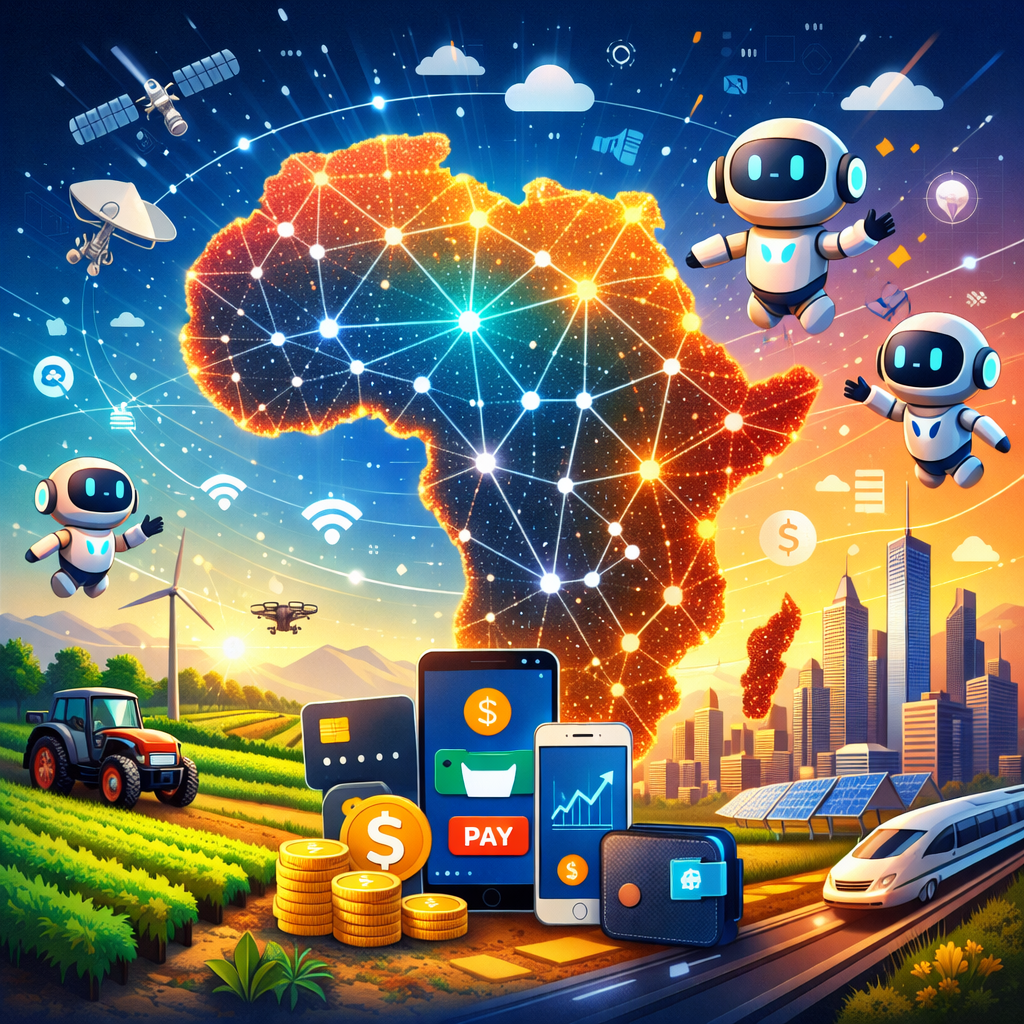



Africa is entering a new phase of digital transformation, where intelligent software systems known as AI agents are beginning to play a practical role across industries. From automating customer support to improving agriculture and financial access, these systems are reshaping how organizations operate and serve communities.
What Are AI Agents?
AI agents are software systems designed to perform tasks autonomously or semi-autonomously. They can observe information, make decisions based on defined goals, and take actions without constant human input. In practical terms, this includes chat assistants, automated decision systems, and workflow tools that interact with users or other systems.
In the African context, AI agents are often designed with a strong focus on efficiency, cost reduction, and accessibility, addressing local challenges such as limited infrastructure and diverse languages.
Key Sectors Adopting AI Agents in Africa
Financial Services and Fintech
Banks and fintech startups are using AI agents to handle customer inquiries, assess credit risk, and detect fraud. Automated agents help extend financial services to underbanked populations by enabling faster loan approvals and mobile-first support.
Agriculture and Food Security
In agriculture, AI agents assist farmers with crop monitoring, weather-based recommendations, and pest detection. These tools help improve yields and reduce losses, especially for small-scale farmers who rely on timely information.
Healthcare and Public Services
Healthcare providers are experimenting with digital agents for appointment scheduling, patient follow-ups, and health information dissemination. In public services, government agencies use them to answer citizen questions and streamline administrative processes.
Education and Skills Development
Educational platforms are deploying AI agents as virtual tutors and support assistants. These systems help learners access personalized guidance, especially in regions where teacher-to-student ratios are high.
Why AI Agents Matter for African Economies
- Scalability: Organizations can serve more users without proportionally increasing costs.
- Accessibility: Digital agents can operate across mobile devices, reaching remote communities.
- Productivity: Routine tasks are automated, allowing human workers to focus on higher-value work.
Challenges Slowing Adoption
Despite growing interest, adoption is not without obstacles. Limited access to quality data, inconsistent internet connectivity, and skills gaps remain significant barriers. There are also concerns around data privacy, transparency, and the ethical use of automated decision systems.
Addressing these challenges requires collaboration between governments, private companies, and educational institutions to create supportive policies and build local expertise.
The Road Ahead
AI agents in Africa are still in an early stage, but momentum is building. As infrastructure improves and local innovation ecosystems mature, these systems are expected to become more specialized and culturally relevant.
The long-term impact will depend on how responsibly they are deployed and how well they align with local needs. With the right approach, AI agents have the potential to support inclusive growth and digital empowerment across the continent.